
Castlewood, Kingston, Joyland, Eastland and Northland
Heating and Cooling in Castlewood, Kingston, Joyland and Northeast Lexington
North and east of downtown, between Bryan Station Road, Winchester Road and New Circle, sit some of Lexington’s most practical neighborhoods. Castlewood, Kingston, Joyland, Eastland and Northland are full of brick and frame ranches from the 1950s and 1960s, with long-time owners, plenty of renters, and houses that have been patched and updated over the years.
If your heat or air conditioning quits in this part of town, the cause is often tied to the age of the ductwork and the crawl space under the house, not just the furnace or outdoor unit.
- Crawl space ducts and why they matter here
- Which repairs usually make sense on older equipment
- What landlords and tenants should sort out first
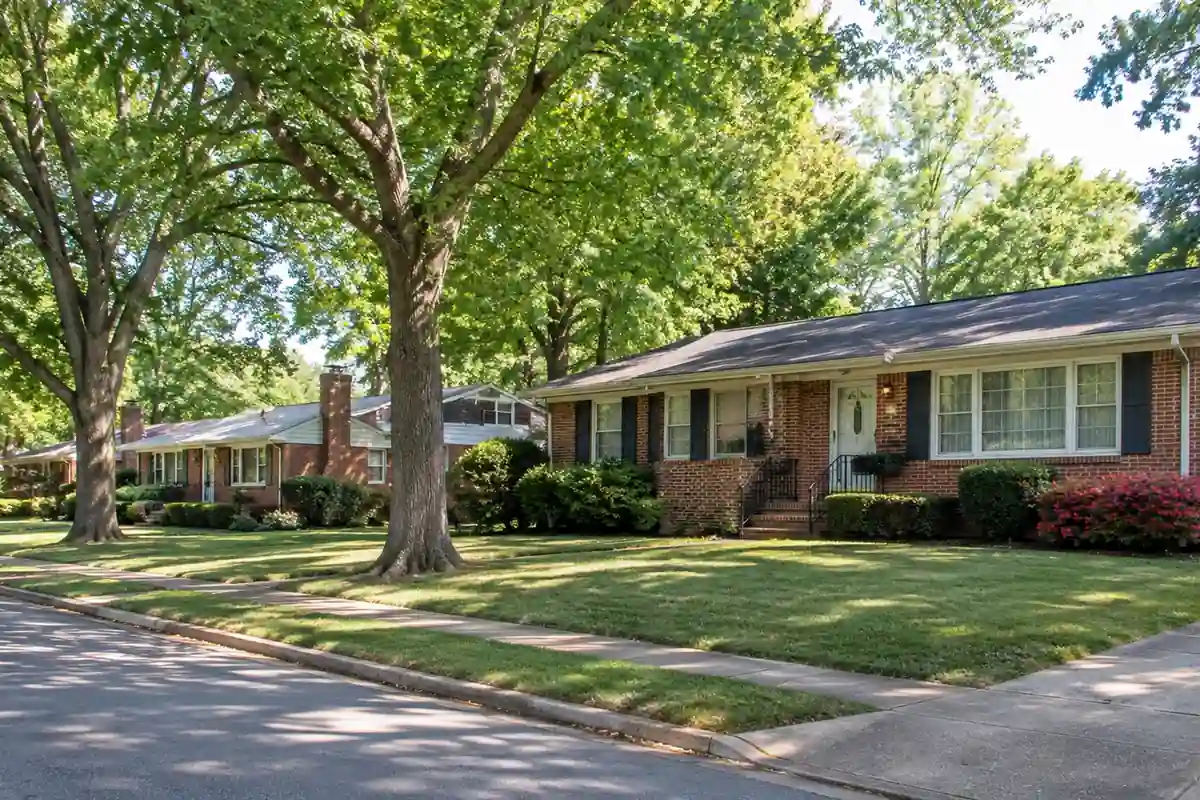
The Houses in This Part of Lexington
Census survey data for the postal area covering Castlewood, Kingston and Joyland puts the median home at 1964, the oldest median of any residential area in the city outside the downtown core. About six in ten homes are owner-occupied, and home values sit well below the city’s pricier neighborhoods, which shapes how people approach big repairs.
Typical setups include:
- A gas or electric furnace in a hall closet or utility room, with ducts running through a crawl space below.
- An outdoor air conditioner added in the 1970s or later, now on its second or third replacement.
- Original galvanized ducts, often with loose joints, crushed sections or missing insulation.
- Smaller returns than the system really needs, especially after a bigger air conditioner was installed.
Crawl Space Ductwork: The Hidden Problem
Under many of these houses, the ducts sit in a crawl space that gets damp in summer and cold in winter. Over sixty years, joints separate, insulation falls off, and the occasional section gets crushed by someone running cable or plumbing. Every leak means air you paid to heat or cool ends up under the floor, and crawl space humidity gets pulled into the house through the return.
Signs your ducts are part of the problem:
- One or two rooms barely get air even with the register wide open.
- The house feels clammy in July even when the thermostat is satisfied.
- Dust builds up quickly, or the crawl space smells musty when the system runs.
- Your summer electric bill climbs year after year without a change in habits.
Sealing joints with mastic, reattaching disconnected runs and insulating supply ducts in the crawl space can make a real difference for a fraction of the price of new equipment. The U.S. Department of Energy points to duct leakage as one of the bigger hidden energy losses in homes with ducts in unconditioned spaces.
Common Calls From Castlewood, Kingston and Joyland
No heat on the first cold morning
Furnaces that sat all summer often fail on the first chilly day. Dust burning off the heat exchanger smells odd for a few minutes and is normal; a furnace that clicks, tries to light and gives up is not. Igniters, flame sensors and pressure switches are the usual suspects, and the furnace repair page explains what each one does.
Air conditioner frozen solid
A clogged filter, a weak blower or low refrigerant can turn the indoor coil into a block of ice. Set the system to off with the fan on, let it thaw, replace the filter, and if it freezes again, it needs a technician. Lexington AC repair goes into the causes in more detail.
An electric furnace that runs constantly
Homes with an electric furnace rely on heating elements that wear out one at a time. When one or two fail, the furnace still blows warm air, just not enough, so it runs almost nonstop on a cold night. Checking each element and its relay is quick work for a technician.
Repair or Replace When Money Is Tight
Not every old system needs replacing, and not every repair is worth doing. A few rules of thumb help:
- If the furnace is under 15 years old and the problem is an igniter, flame sensor, capacitor or blower motor, repairing it is usually the sensible choice.
- If an air conditioner older than about 12 years needs a new compressor or indoor coil, get a replacement price before agreeing to the repair.
- If a gas furnace has a cracked heat exchanger, replacement is the safe route.
- Ask for a written, itemized quote either way so you can compare.
When replacement is on the table, the furnace replacement guide and AC replacement guide explain what a fair quote should include, including whether the ducts get attention too.
Renters and Landlords
With roughly four in ten homes in this area rented, a lot of heating and cooling calls start with a tenant and end with a landlord. Tenants should report problems in writing and note the date. Landlords who own several houses here can save repeat visits by having filters changed on a schedule and the crawl space ducts checked once, since many of these houses were built the same way.
HVAC Services in Northeast Lexington
- Furnace repair for gas and electric furnaces
- Air conditioner repair for frozen coils, warm air and noisy outdoor units
- Furnace and AC cleaning to catch worn parts before the season
- Furnace replacement when repairs no longer add up
- AC replacement with duct checks included in the plan
Nearby Areas
Heading into town, downtown and the Northside have older two-story homes with different issues. East of I-75, Hamburg, Andover and Greenbrier are mostly built since the 1990s, and past the edge of town, the rural east end of Fayette County brings its own heating questions. See every area covered in Lexington.
Northeast Lexington HVAC Questions
Should I put a vapor barrier in my crawl space?
A plastic vapor barrier over a dirt crawl space floor reduces the moisture that ends up in your ducts and house. It pairs well with sealing duct leaks and is a common, sensible step in older Lexington ranches.
How often should I change my furnace filter?
Check it monthly during heavy use. Basic one-inch filters usually need changing every one to three months, more often with pets or renovation dust.
My outdoor AC unit hums but the fan won’t spin. What is it?
A failed run capacitor is a common cause. Turn the system off at the thermostat and the outdoor disconnect and call for service, because running it that way can overheat the compressor.
Is a bigger air conditioner better for an old house?
No. An oversized unit cools quickly but shuts off before removing humidity, leaving the house cool and clammy. Proper sizing based on a load calculation matters more than tonnage.
In Castlewood, Kingston, Joyland or nearby? Call to reach an independent local provider for your furnace or AC.
Call (859) 517-8017Sources
- U.S. Census Bureau, American Community Survey 5-year profile: Castlewood, Kingston and Joyland area
- U.S. Department of Energy, Minimizing energy losses in ducts
- U.S. Environmental Protection Agency, A brief guide to mold, moisture and your home