
Downtown, Northside, East End and nearby historic streets
Heating and Cooling Help in Downtown Lexington, Northside and the East End
Downtown Lexington is where the city’s oldest houses sit next to its newest apartments. A Victorian on North Limestone, a shotgun house in the East End and a condo above Main Street all need heat in January and cooling in July, but the reasons they struggle have little in common.
This page covers the neighborhoods in and around the center of town: Northside, the East End, Gratz Park, Woodward Heights, South Hill, Bell Court, Aylesford and the blocks near the University of Kentucky. If your furnace or air conditioner is acting up in one of them, here is what usually causes it and what to ask before anyone starts work.
- Why older downtown houses heat and cool unevenly
- What historic district rules mean for an outdoor unit
- Repair or replace questions for rentals, condos and old homes
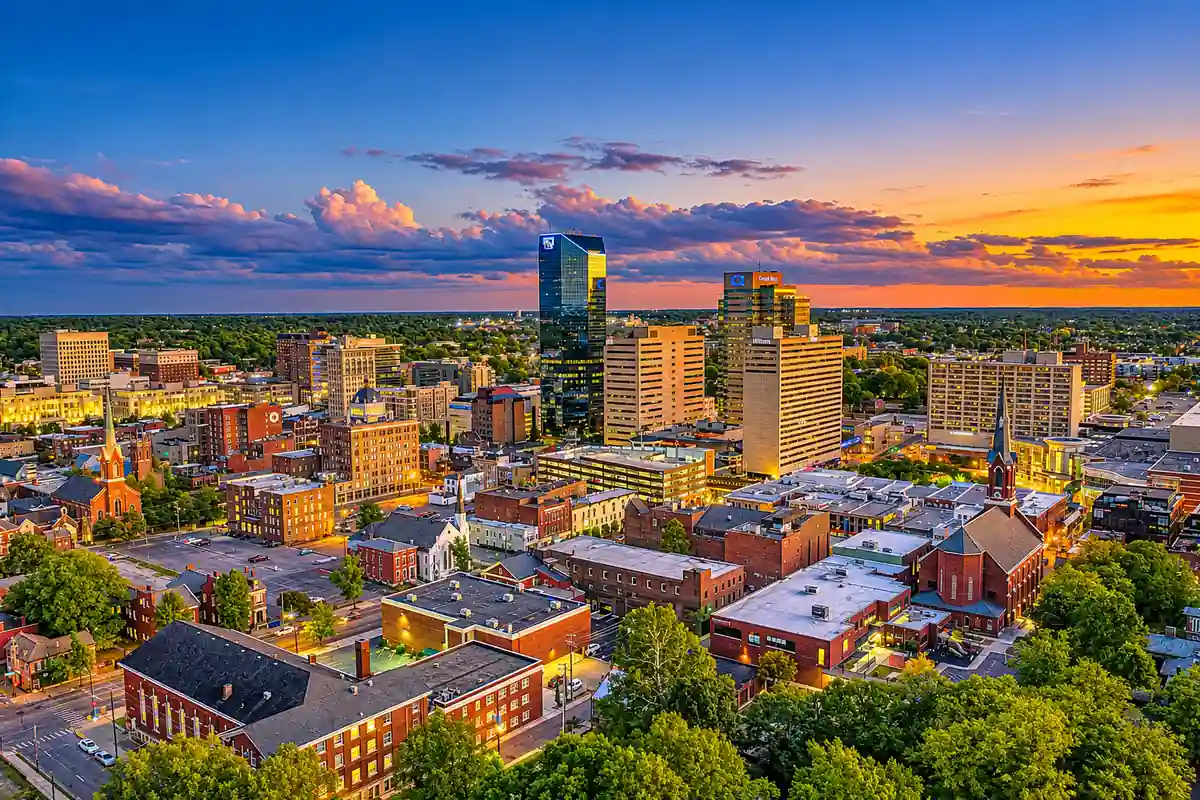
What Downtown Housing Means for Your HVAC
The Census Bureau’s latest five-year survey puts the median build year for homes in the postal area covering Northside, the East End and the streets around campus at 1967. That middle number hides a wide spread. Some blocks date to the 1800s, others are 1960s apartment buildings, and there is plenty of recent infill.
Three kinds of homes come up again and again:
- Pre-war houses with plaster walls, tall ceilings and basements or crawl spaces that were never planned for ductwork. Central air came later, often with ducts squeezed into closets or run through the attic.
- Shotgun and small frame houses around the East End, where the furnace may share a closet with the water heater and the return air path is tiny.
- Condos and apartments in the core, where equipment sits on a roof, a balcony or in a mechanical closet, and building rules decide who can work on it.
Problems People Run Into Most in Older Downtown Homes
Upstairs too hot, downstairs too cold
In a two-story house that got ductwork decades after it was built, the second floor usually loses. Supply runs are long, returns are few, and the attic above bakes in summer. A technician can measure airflow at each register and tell you whether the answer is balancing dampers, an added return, sealing leaky attic ducts, or a second system for the upper floor.
A furnace that won’t stay lit
Plenty of downtown furnaces are past 20 years old. A dirty flame sensor, a worn igniter or a clogged condensate line on a high-efficiency model are the usual reasons a gas furnace lights, runs a minute and shuts off. Those are repairs, not replacements, and the Lexington furnace repair guide lists what a technician should check first.
Venting through an old chimney
Older gas furnaces and water heaters often vent into a masonry chimney. When a newer, more efficient furnace goes in, that chimney can end up too large or too cold for the exhaust, and condensation starts eating at the mortar. If you are replacing a furnace in an older home, ask how it will be vented and whether the chimney needs a liner. If you ever smell gas or a carbon monoxide alarm sounds, get everyone outside first, then call the gas utility or 911.
An air conditioner that runs all afternoon and never catches up
Brick holds heat. On a humid July afternoon a tired or undersized air conditioner in a downtown house may run without stopping and still leave the rooms sticky. A slow refrigerant leak, an outdoor coil matted with cottonwood fluff, or a weak capacitor are common causes, and the AC repair page explains how to tell a quick fix from a bigger problem.
Historic District Rules and Outdoor Units
Lexington has 15 local historic districts under an H-1 overlay, and a cluster of them sits in or beside downtown: Gratz Park, Northside, Western Suburb, Constitution, Elsmere Park, South Hill, Woodward Heights, Bell Court and Aylesford. In these districts, exterior changes need a Certificate of Appropriateness from the city before work begins.
For heating and cooling, that mostly comes up when an outdoor condenser is moved, a unit is added where there was none, or a new vent goes through a wall facing the street. Setting a replacement unit on the same pad is usually the simpler path. The city’s historic preservation staff can confirm what your project needs, and a contractor who works downtown regularly should raise the question before quoting, not after. The building permit for a new furnace or air conditioner is a separate step handled by the Division of Building Inspection.
Renting Downtown? Sorting Out Who Handles the Repair
In the central downtown area, only about one home in five is lived in by its owner, according to the same Census survey. So a lot of people reading this rent. If your lease makes the landlord responsible for heating and cooling, report the problem in writing and keep a copy with the date. Landlords and property managers can use the number on this page to reach a local provider for their building.
Repair or Replace in an Older House?
Age alone doesn’t settle it. A 22-year-old furnace with a sound heat exchanger may only need an igniter, while a 12-year-old air conditioner with a leaking indoor coil may not be worth recharging. In older downtown homes, three extra questions are worth asking before you replace anything:
- Will the new equipment fit down the basement stairs or through the closet door? Some older homes need a smaller cabinet or a different layout.
- Is the ductwork part of the problem? New equipment pushing air through undersized or leaky ducts tends to leave the same hot and cold rooms.
- Will the outdoor unit stay in the same spot, and does that spot fall under historic review?
If the answers point toward new equipment, the furnace replacement and air conditioner replacement pages cover sizing and what a written quote should spell out.
Heating and Cooling Services Available Downtown
- Furnace repair for no-heat calls, short cycling and burner trouble
- Central AC repair when the house won’t cool or the indoor coil freezes up
- Furnace and AC cleaning before each heating or cooling season
- Replacing an old gas furnace, including venting questions in older homes
- Replacing a central air conditioner that no longer earns another repair
Nearby Parts of Lexington
Just south of downtown, Chevy Chase and Ashland Park share many of the same older-home quirks. North and east, Castlewood, Kingston and Joyland are mostly mid-century ranches with a different set of problems. Every neighborhood guide is listed on the Lexington areas we serve page.
Downtown Lexington HVAC Questions
Can a new outdoor AC unit go on the street side of a historic home?
It depends on the district and how visible the spot is. In an H-1 district, a new or relocated condenser on a street-facing side is the kind of exterior change that may need a Certificate of Appropriateness, so check with the city’s historic preservation staff before the unit is set.
My condo’s air conditioner is on the roof. Who can work on it?
Start with your association documents. Some buildings let owners hire any provider for equipment that serves only their unit, while others require an approved vendor and roof access arranged through management.
Why does my old house feel so dry in winter?
Older homes leak air. Cold outside air carries little moisture, and once it warms up indoors the relative humidity drops. Sealing obvious drafts around windows, doors and the attic hatch usually helps more than turning the thermostat up.
Do I need a permit to replace a furnace downtown?
Yes. Replacing a furnace or central air conditioner in Lexington requires a permit through the Division of Building Inspection. Historic district review, when it applies, is a separate approval.
In downtown Lexington, Northside or the East End? Call to reach an independent provider who works on older city homes.
Call (859) 517-8017Sources
- U.S. Census Bureau, American Community Survey 5-year profile: Northside, East End and campus area
- U.S. Census Bureau, American Community Survey 5-year profile: central downtown
- Lexington-Fayette Urban County Government, H-1 overlay district and landmark maps
- Lexington-Fayette Urban County Government, Certificate of Appropriateness for historic districts
- Lexington-Fayette Urban County Government, Division of Building Inspection