
Cleaning timed to Lexington’s seasons
Furnace & AC Cleaning in Lexington, KY
Dust on a furnace burner and cottonwood fluff in an outdoor coil cause more Lexington no-heat and no-cool problems than most people expect. A proper cleaning of the furnace before winter and the air conditioner before summer clears out the dirt that makes parts fail.
- What a furnace cleaning should cover
- What an AC cleaning should cover
- What you can safely do yourself between cleanings
Why Cleaning Matters in Lexington
Lexington’s climate works a system hard in both directions. NWS normals show about 4,432 heating degree days and 1,289 cooling degree days a year at Blue Grass Airport, so the furnace does more total work while the air conditioner faces a short, intense and humid season. Each season leaves its own kind of dirt behind:
- April and May: cottonwood fluff and tree pollen coat outdoor AC coils right before they are needed most.
- June through September: condensate lines grow algae and slime, and dust collects on the indoor coil.
- October and November: furnaces start up after months idle with dust on the burners and a film on the flame sensor.
- December through February: long run times pull household dust through the filter and blower.
What Dirt Does to a System
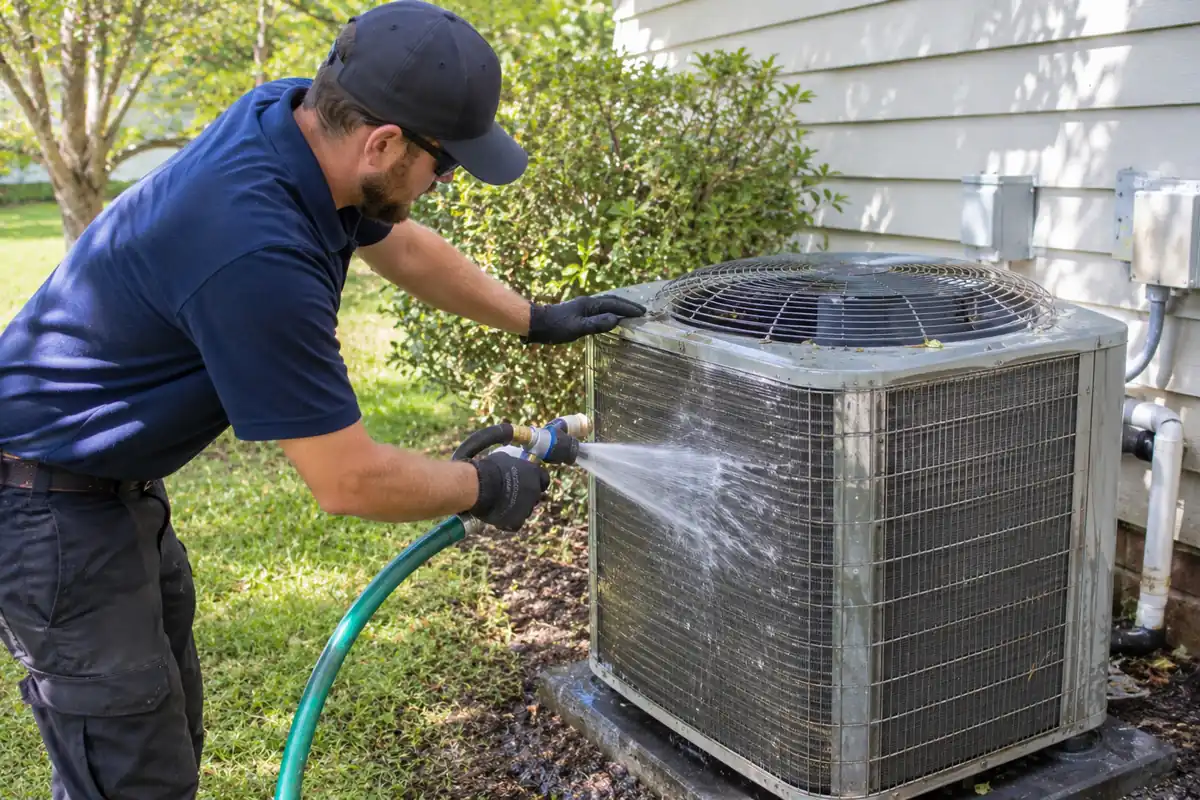
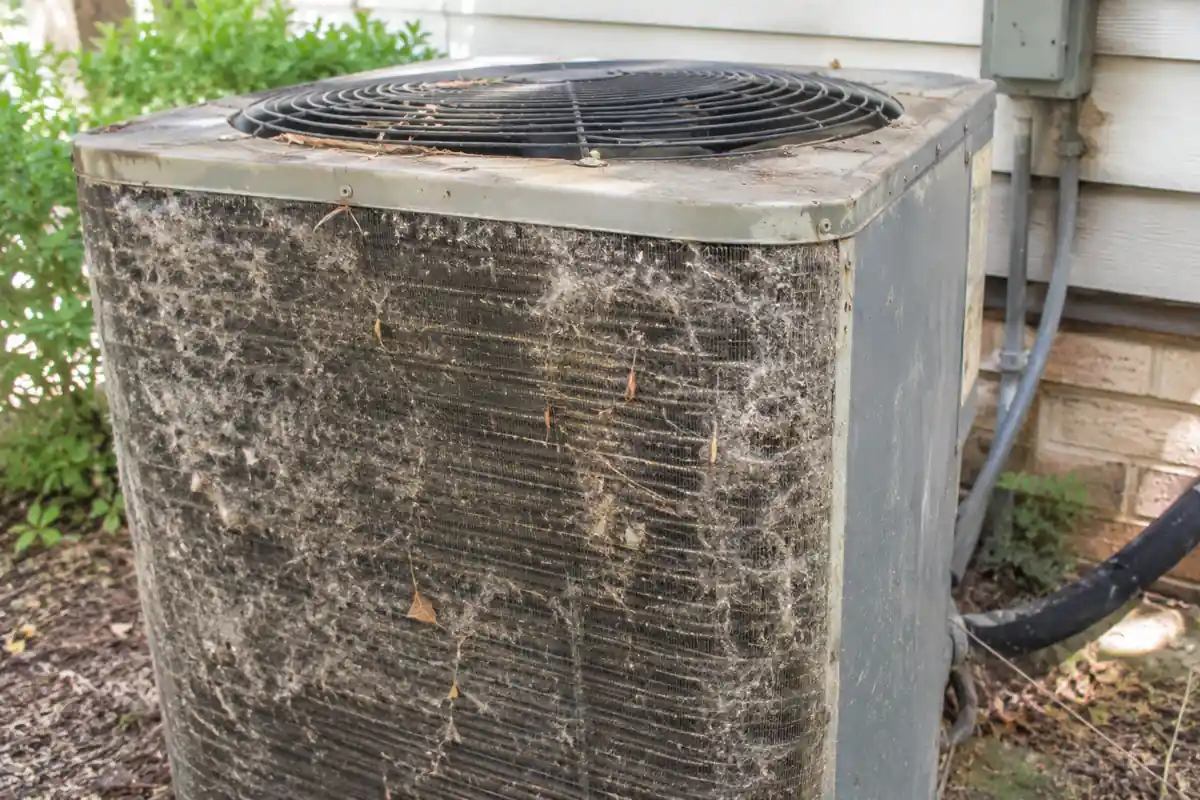
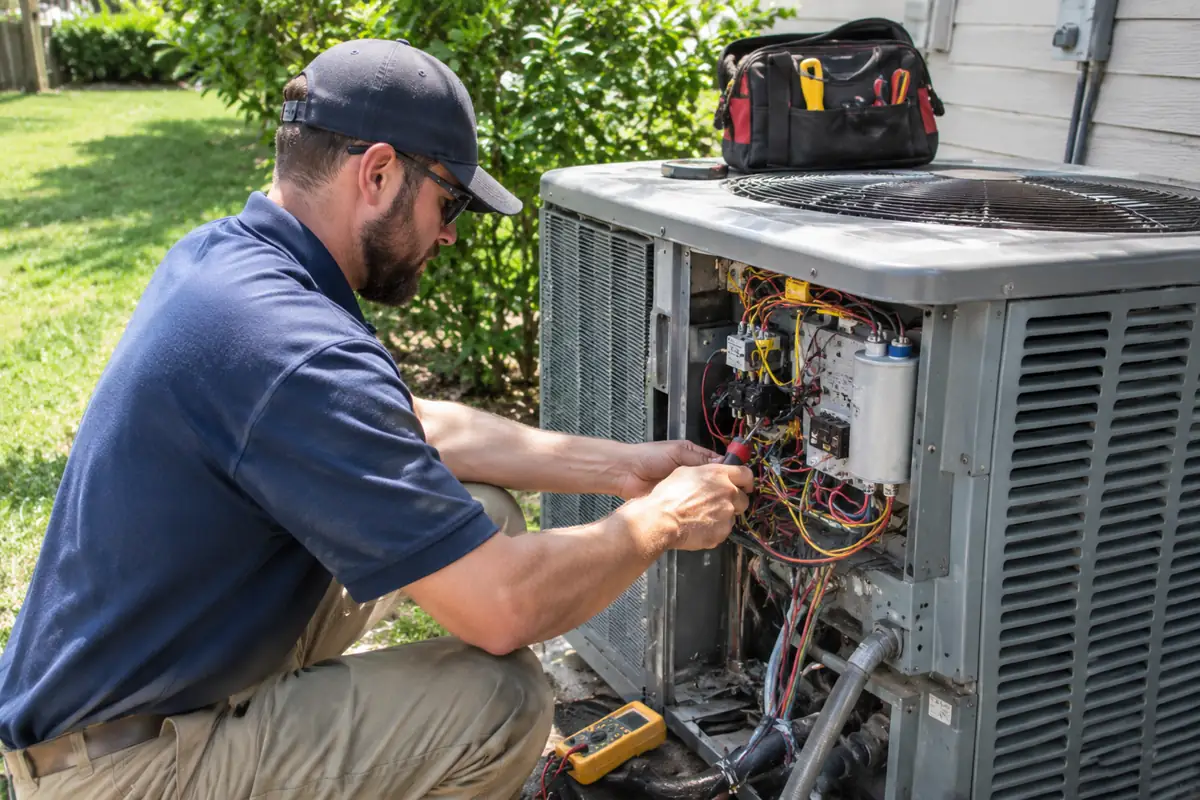
A matted outdoor coil
Pollen and fluff block the fins, so the condenser cannot shed heat. Pressures rise, the compressor runs hotter and the power bill climbs.
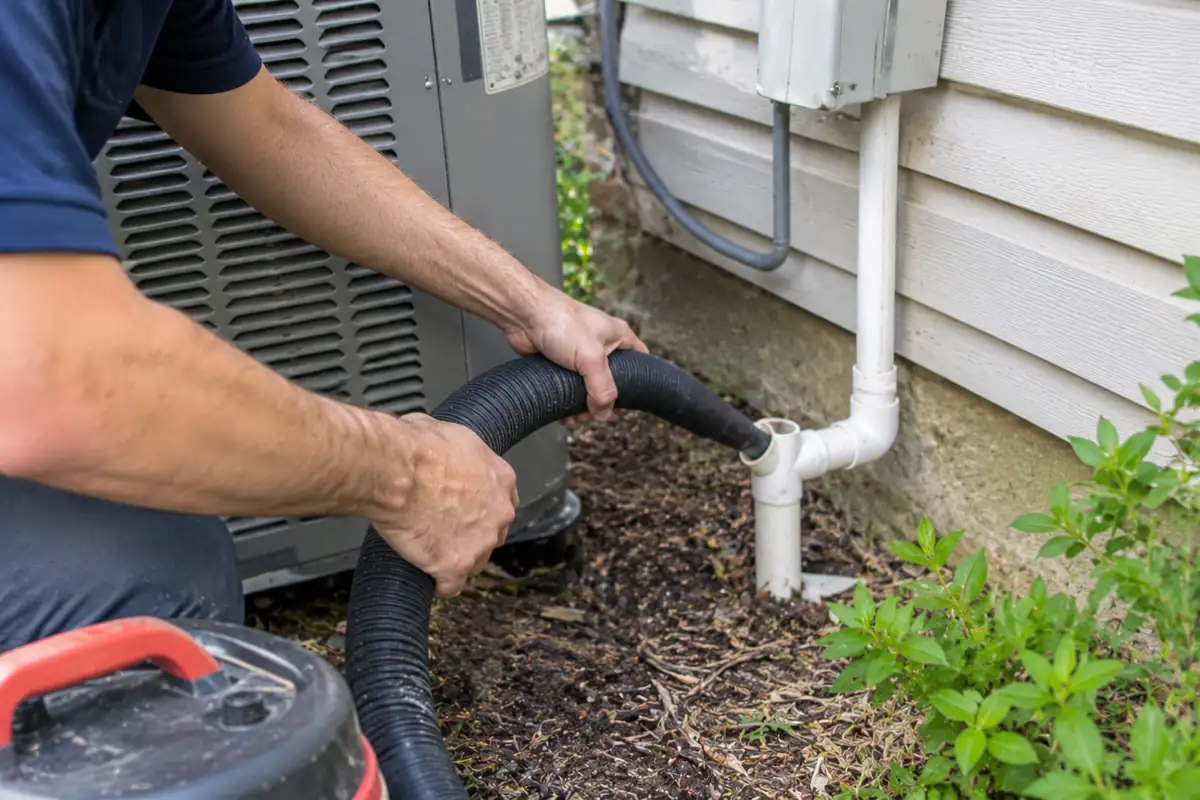
A slow or blocked drain
Water backs up in the drain pan, or a float switch shuts the AC down on humid days. In attic installs, an overflow can stain the ceiling below.
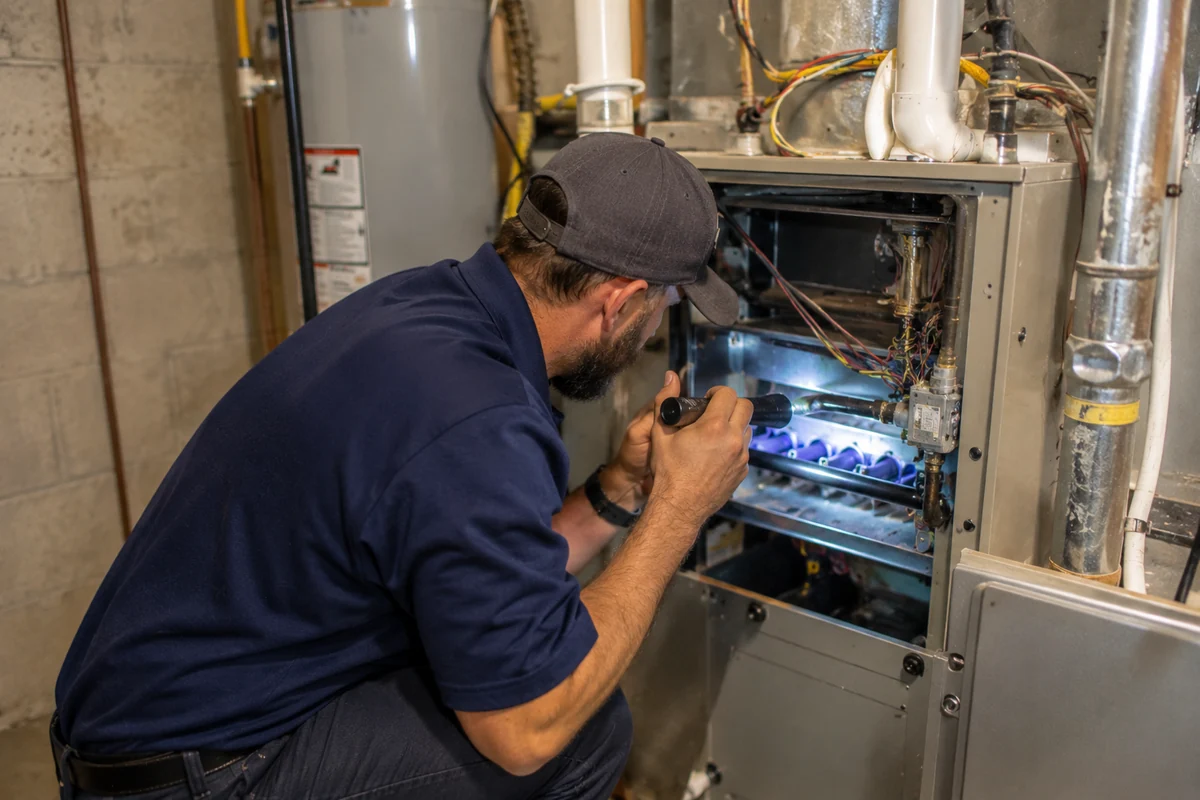
Dust on the burners and flame sensor
A coated flame sensor causes the classic “lights, then shuts off” furnace problem in November. Dirty burners can also burn unevenly.
A clogged filter and blower
ENERGY STAR suggests checking filters monthly. In a house with pets, a crawl space or construction nearby, a 1-inch filter can clog in weeks, and the dust that gets past it ends up on the blower wheel.
What a Furnace Cleaning Should Include
A furnace cleaning fits early fall, before the first cold snap. A thorough one usually covers:
- Replacing or cleaning the filter
- Cleaning the burners and the burner compartment
- Cleaning the flame sensor and checking the igniter
- Vacuuming the cabinet and cleaning the blower wheel and motor area
- Checking the flue and venting for blockages, including PVC vents on high-efficiency furnaces
- Clearing the condensate trap and drain on high-efficiency furnaces
- Inspecting the heat exchanger area for cracks or soot, and checking for carbon monoxide
What an AC Cleaning Should Include
An AC cleaning fits spring, after the worst of the cottonwood season but before June heat. A thorough one usually covers:
- Shutting off power and cleaning the outdoor condenser coil with a coil cleaner and gentle rinse
- Straightening bent fins and clearing leaves and debris from the base of the unit
- Inspecting and, where it can be reached, cleaning the indoor evaporator coil
- Flushing the condensate drain line and drain pan, and testing the float switch
- Cleaning the blower and replacing the filter
- Running the system afterward to confirm it is cooling and draining properly
| Area | Furnace cleaning (fall) | AC cleaning (spring) |
|---|---|---|
| Filter | Replace or clean | Replace or clean |
| Main focus | Burners, flame sensor, cabinet | Outdoor coil, indoor coil, drain |
| Blower | Clean wheel and motor area | Clean wheel and motor area |
| Drainage | Condensate trap on high-efficiency furnaces | Drain line, drain pan and float switch |
| Safety check | Venting and carbon monoxide | Electrical disconnect and wiring condition |
How a Cleaning Visit Usually Runs
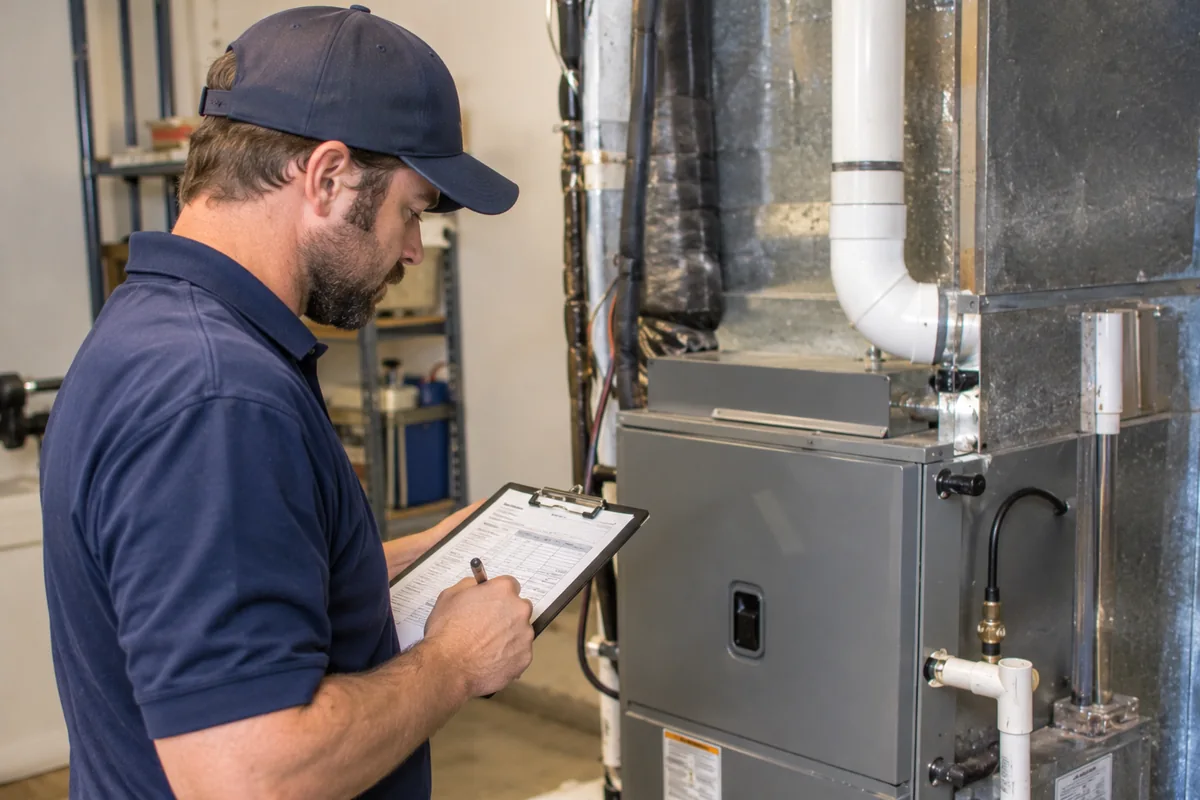
- Talk with you about anything you have noticed, such as smells, noises or short cycling.
- Shut off power and, for a furnace, the gas supply.
- Clean the parts listed above for the season.
- Restore power and run the system through a full cycle.
- Explain anything that looks worn or close to failing, ideally with a photo.
If the provider finds a part that needs replacing, ask them to show you the problem. A cleaning visit should leave you with a clear picture of the system’s condition, not pressure to decide on the spot.
What You Can Do Between Cleanings
- Check the filter every month and replace it when it is dirty.
- Keep two feet of space around the outdoor unit. Trim shrubs and pull leaves away in fall.
- Rinse loose cottonwood off the outdoor coil with a garden hose (power off), never a pressure washer.
- Pour a cup of white vinegar into the condensate line’s access port in early summer, if your system has one and the manufacturer allows it.
- Test carbon monoxide alarms when you change the clocks.
- In winter, keep snow and leaves away from any PVC furnace vents outside.
Furnace & AC Cleaning FAQ
How often should a furnace and AC be cleaned?
Many homeowners have the furnace cleaned each fall and the air conditioner cleaned each spring. Homes with pets, heavy pollen or nearby construction may need it more often.
When is the right time in Lexington?
Furnace cleaning in September or October, before the first frosts. AC cleaning in April or May, after cottonwood season winds down but before the June heat.
Why does my furnace smell like burning dust the first cold day?
Dust that settled on the burners over summer burns off when the heat first comes on. It usually fades within an hour. Our article on a furnace burning smell explains which smells are normal and which are not.
Can I clean my own AC coil?
You can gently rinse loose debris off the outdoor coil with the power off. Chemical coil cleaning, indoor coil work and anything inside a furnace is better left to a professional.
Is duct cleaning part of a furnace or AC cleaning?
No. Duct cleaning is a separate service. A furnace or AC cleaning focuses on the equipment itself.
What filter should I buy?
Use the size printed on the current filter and the rating the manufacturer recommends. Very restrictive filters can reduce airflow on some systems.
Related Pages
Ready to have your furnace or AC cleaned? Call to set it up with a provider in your area.
Call (859) 517-8017Sources
- ENERGY STAR, Maintenance Checklist
- National Weather Service, Lexington normals, 1991–2020
- Centers for Disease Control and Prevention, Carbon Monoxide Poisoning Basics