Heat Pump or Gas Furnace for a Lexington Winter?
Ask ten Lexington homeowners whether to choose a heat pump or gas furnace and you’ll get strong opinions both ways. The honest answer is that it depends on the house, the ductwork, whether there’s a gas line, and how you weigh comfort against operating cost. This article lays out how each option behaves in a Lexington winter so you can make the call with real information.
What Lexington Winters Actually Look Like
Lexington isn’t Minneapolis, and it isn’t Atlanta either. National Weather Service normals for Blue Grass Airport put the average January low at 25.4°F and record about 90 nights a year at or below freezing. Zero-degree nights are rare, averaging less than one a year. Heating degree days total about 4,432, more than three times the cooling load.
That profile matters. Most of the heating season is spent in the 20s, 30s and 40s, which is the range where a modern heat pump does well. The truly frigid nights that favor gas heat are few.
How Each System Heats
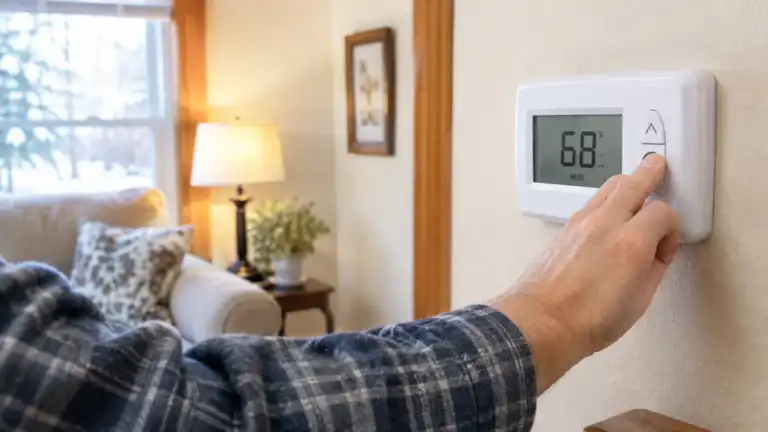
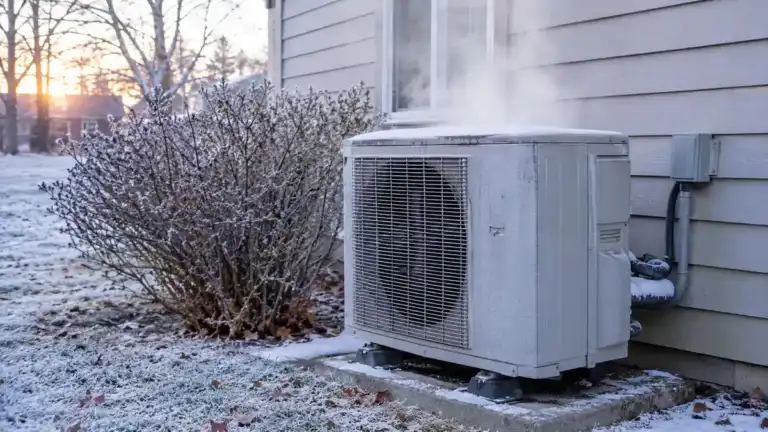
A heat pump moves heat from outdoor air into the house. The U.S. Department of Energy says a properly installed one can deliver up to three times more heat energy than the electricity it uses. It also cools in summer, so one outdoor unit handles both seasons. On the coldest nights it gets help from electric heat strips, shown on the thermostat as AUX HEAT. Our aux heat article explains how that backup behaves.
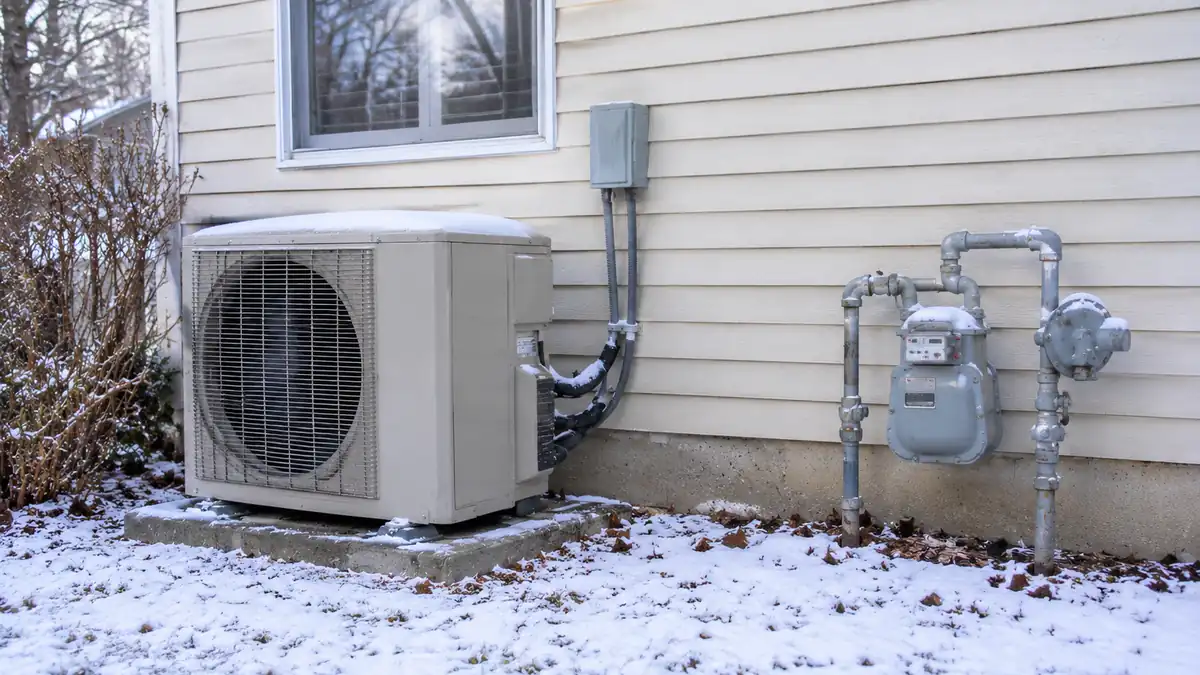
A gas furnace burns natural gas, supplied in Lexington by Columbia Gas of Kentucky, and blows the heat through ducts. It produces hotter air at the register and doesn’t lose output as the outdoor temperature drops. Cooling comes from a separate central air conditioner.
Side by Side
| Heat pump | Gas furnace | |
|---|---|---|
| Fuel | Electricity from KU | Natural gas from Columbia Gas |
| Air temperature at vents | Warm, typically in the 90s | Hotter, often well above 120°F |
| Performance in deep cold | Drops as temperature falls; backup strips help | Steady regardless of outdoor temperature |
| Cooling | Built in | Needs a separate air conditioner |
| Combustion and CO risk | None from the heat pump itself | Requires proper venting and a CO alarm |
| Federal 25C credit | Ended for equipment placed in service after Dec 31, 2025 | Ended for equipment placed in service after Dec 31, 2025 |
The Dual-Fuel Middle Ground
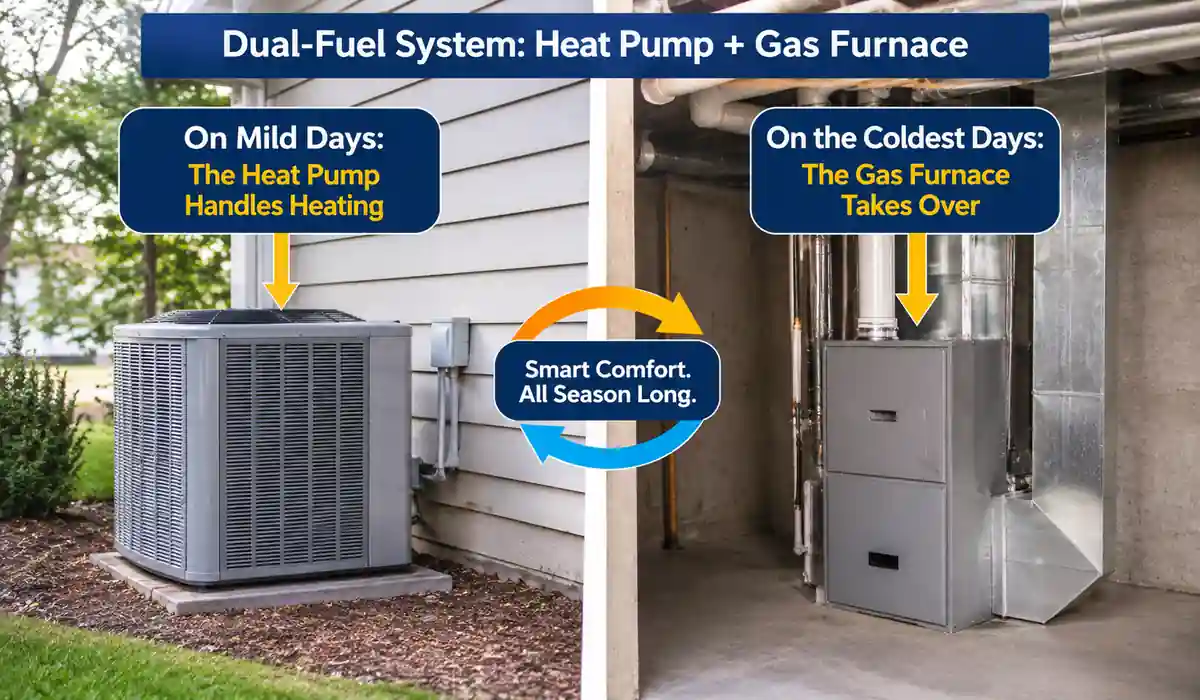
Many Lexington homes don’t have to choose. A dual-fuel system pairs an outdoor heat pump with an indoor gas furnace. The heat pump runs on mild and moderately cold days, which covers most of the season. When the temperature drops below a set point, the furnace takes over. If your house already has a gas furnace in decent condition and an air conditioner that’s due for replacement, swapping that AC for a heat pump creates a dual-fuel setup without replacing the furnace.
The changeover temperature is the key setting. Set too high, the furnace runs more than it needs to. Set too low, the heat pump struggles and the house feels drafty. A technician can set it based on your equipment and current utility rates.
Comparing Operating Costs Yourself
Rates change, so any number we printed would go stale. Instead, here’s how to compare with your own bills:
- Find your price per kWh on your KU bill and your price per therm on your Columbia Gas bill, including delivery and fees.
- A therm contains 100,000 BTU. A kWh contains about 3,412 BTU.
- For a gas furnace, divide the price per therm by the furnace efficiency (for example 0.80 or 0.95). That’s your cost for 100,000 BTU delivered.
- For a heat pump, take the price per kWh, multiply by 29.3 (the kWh in 100,000 BTU), then divide by the heat pump’s efficiency multiplier at the temperature you care about. A unit delivering three times the energy it uses has a multiplier of 3; in colder weather that number drops.
- Compare the two results. Remember that heat strips have a multiplier of 1, so heavy aux heat use changes the math.
Your HVAC provider can help with the efficiency numbers for specific equipment at Lexington temperatures.
Questions That Usually Decide Heat Pump or Gas Furnace
- Is there a gas line? Running new gas service to a house that doesn’t have it adds cost and permitting. Homes without gas often lean heat pump.
- What shape are the ducts? Heat pumps move more air at lower temperatures. DOE says they need roughly 400 to 500 cubic feet per minute per ton. Small or leaky ducts in older Lexington homes can be a problem for either system, but heat pumps feel it more.
- How do you feel about warm-but-not-hot air? Some people love the steady, mild heat of a heat pump. Others want the blast of a furnace.
- What’s the electrical panel like? A heat pump with backup strips needs adequate panel capacity. Older houses may need an upgrade.
- Is the AC due too? If the air conditioner is near the end, a heat pump replaces it and adds efficient heating.
How This Plays Out in Different Parts of Town
In many 1990s and 2000s subdivisions on the east and southwest sides, homes were built all-electric with heat pumps, and replacing like for like is the simplest path. In older central neighborhoods, gas furnaces in basements are common, and dual fuel is often the practical upgrade. Larger homes with zoned systems sometimes mix both: a furnace for the main floor and a separate heat pump for an addition.
Next Steps
If you’re leaning heat pump, ask for a load calculation and a duct check before comparing equipment. If you’re keeping gas, the furnace replacement page explains venting, efficiency and what to compare between quotes.
Common Questions
Can a heat pump keep up in a Lexington cold snap?
A properly sized heat pump with backup heat will keep the house warm. On the rare nights near zero, backup strips or a furnace in a dual-fuel setup carry more of the load.
Is gas heat safer than a heat pump?
Both are safe when installed and maintained correctly. Gas furnaces require venting and a CO alarm. Heat pumps don’t burn fuel, so there’s no combustion risk from the heat pump itself.
Which lasts longer?
Gas furnaces often run 15 to 20 years. Heat pumps run year-round, heating and cooling, so they typically see more operating hours each year.
Will switching to a heat pump raise my electric bill?
Your electric bill will rise and your gas bill will fall or disappear. Whether the total goes up or down depends on rates, efficiency and how often backup heat runs.
Is dual fuel worth it?
It’s often worth considering if you already have a working gas furnace and need a new air conditioner.
Still deciding between a heat pump and a gas furnace? Call to talk it through with a local provider.
Call (859) 517-8017Sources
- National Weather Service, Lexington monthly normals, 1991–2020 and normal number of days
- U.S. Department of Energy, Air-Source Heat Pumps
- Internal Revenue Service, Instructions for Form 5695
- U.S. Energy Information Administration, British thermal units explained