
Central air conditioning in Lexington
AC Repair in Lexington, KY
It’s 4 p.m. in late July, the thermostat is set to 72, and the living room reads 79 and sticky. The air conditioner is running. It just isn’t winning.
- Why Lexington’s humidity makes a weak AC feel worse than it looks on the thermostat
- The failures that cause most summer breakdowns here
- What you can check safely, and the steps to leave to a technician
What Lexington Summers Do to an Air Conditioner
AC repair in Lexington peaks in a narrow window. National Weather Service normals put about 25 days a year at 90°F or above, and July alone averages about nine of them, with August close behind. Those afternoons push equipment to its limit, but the humidity is the bigger story. Bluegrass summers are muggy, and an air conditioner has to pull moisture out of the air as well as cool it.
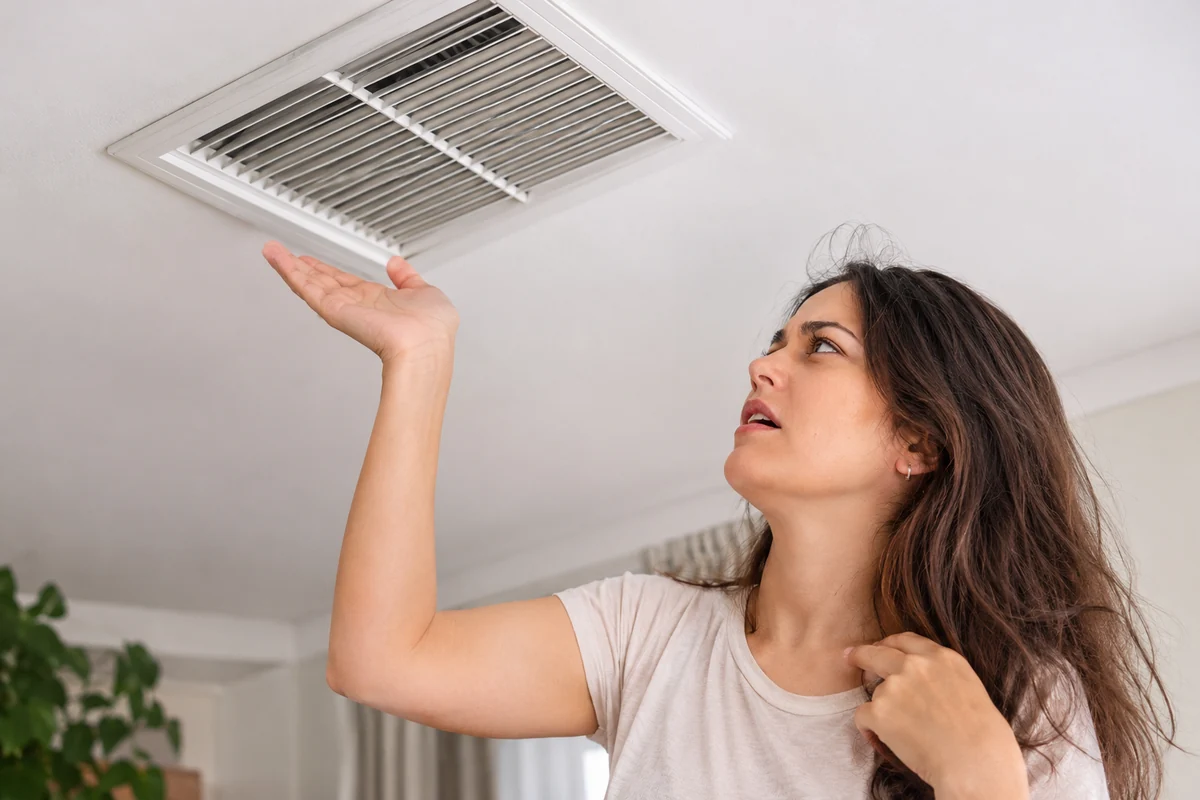
That matters because the two jobs fail separately. A system can still drop the temperature while leaving the house damp and clammy, and the EPA recommends keeping indoor humidity below 60 percent, ideally between 30 and 50. If your house feels cool but sticky, the AC isn’t healthy, even if the thermostat says otherwise.
Local conditions add to the load:
- Cottonwood and pollen. In spring, fluff and pollen pack into condenser fins, and by July a matted coil makes the compressor run hot.
- Attic air handlers. Many two-story homes in the newer parts of town have the indoor unit in an attic that can bake well above 120°F on a hot day.
- Retrofitted older homes. Houses near downtown and in Chevy Chase often got central air decades after they were built, with small ducts and too little return air.
- Algae in condensate lines. Warm, wet drain lines grow slime that eventually blocks them and trips the safety float switch.
Reading the Symptoms
The air is warm or barely cool
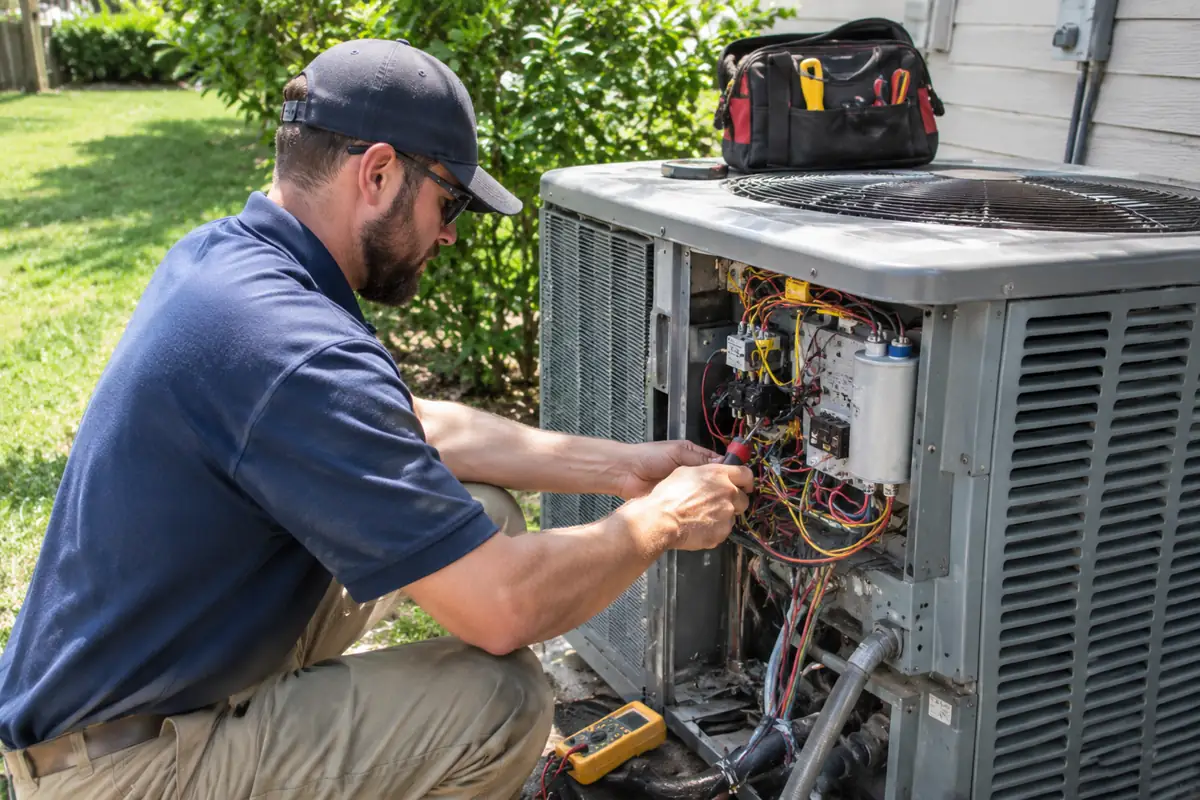
Go outside and look at the condenser. If the fan isn’t spinning, or the unit is humming without starting, a failed capacitor or contactor is likely. If everything is running but the air is still warm, think low refrigerant or a dirty coil.
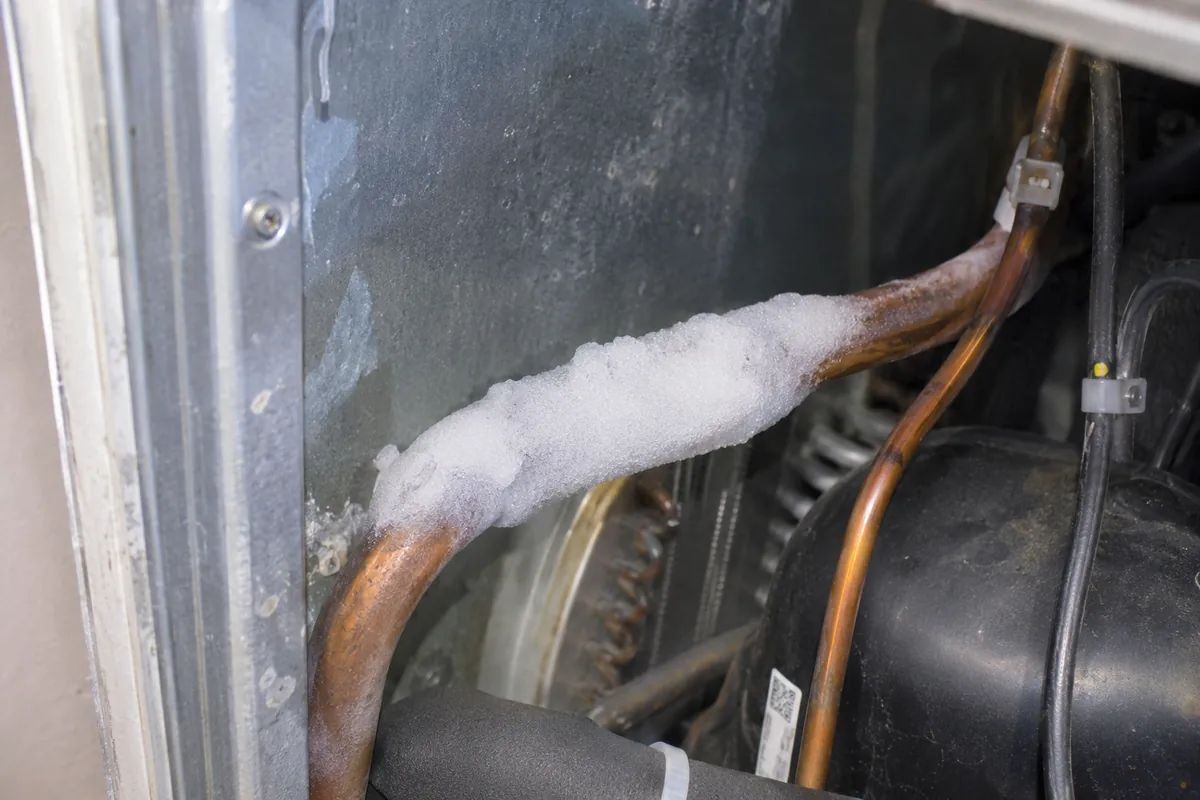
Ice on the copper line or indoor coil
Ice means the coil is too cold, usually from low airflow (dirty filter or coil, failing blower) or low refrigerant. Turn the cooling off and run the fan only so it can thaw.
Water where it shouldn’t be
Water around the air handler, a stained ceiling under an attic unit, or a system that shuts off on its own on humid days points to a clogged condensate drain.
The breaker keeps tripping
That’s the system telling you something is drawing too much current: a failing compressor, a shorted fan motor, or a capacitor that’s no longer helping the motors start. Don’t keep resetting it.
What Usually Breaks
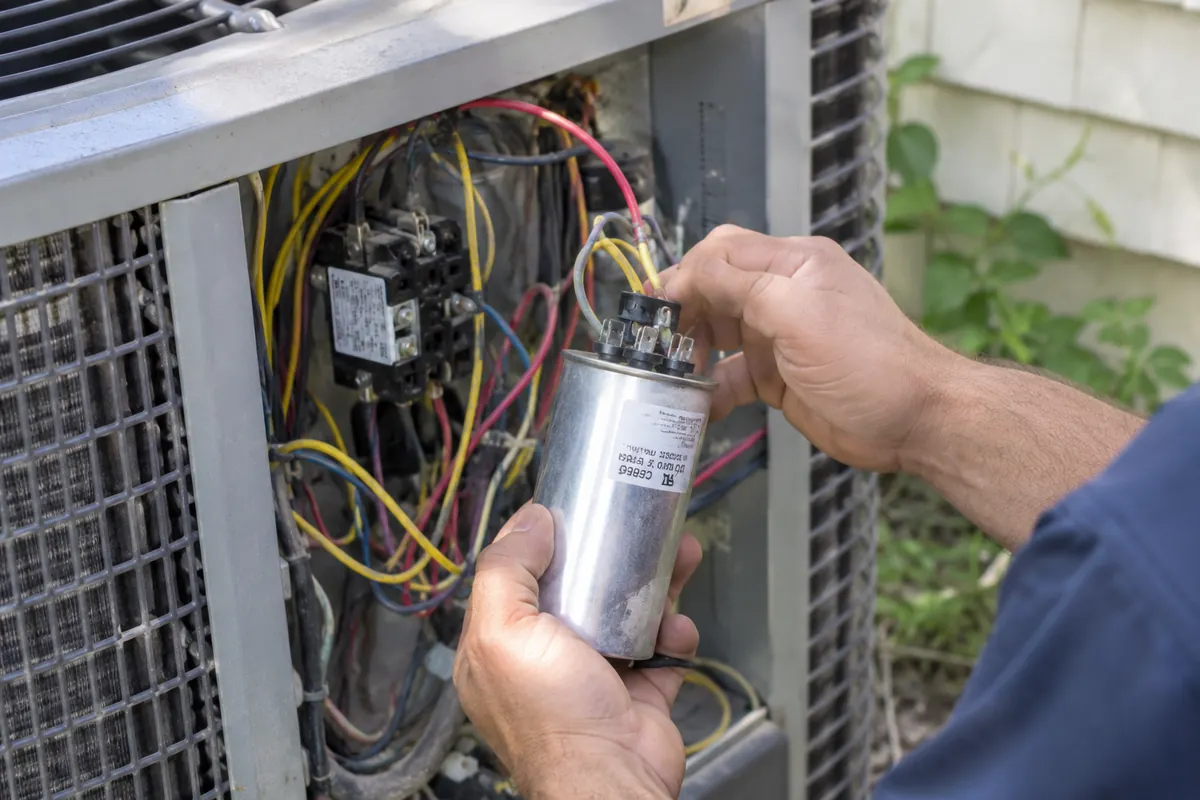
Run capacitor
The most frequent summer failure. It gives the compressor and fan motor a jolt at start-up. Heat weakens it over time, and a bulging top is a giveaway.
Contactor
This switch turns the outdoor unit on and off. Pitted contacts, insects or ants nesting inside it can stop it from closing.
Refrigerant leak
Air conditioners don’t use up refrigerant. If the charge is low, there’s a leak, often at the indoor coil, a service valve or a vibration point on the line set.
Dirty coils and blocked drains
A coil caked with dust or cottonwood can’t move heat, and a slimed drain line can shut the system down through its float switch.
How the Work Should Go
- Confirm thermostat settings and check the filter and indoor airflow.
- Kill power at the disconnect, then test the capacitor and contactor with a meter.
- Inspect the outdoor coil and fan, and clean them if they’re restricting airflow.
- Measure refrigerant pressures and line temperatures instead of guessing at the charge.
- Clear and flush the condensate line, and test the float switch.
- Run the system and measure the temperature drop between return and supply air.
If the technician says the system needs refrigerant, ask whether they found the leak and what repairing it involves. Adding refrigerant without finding the source means you’ll likely face the same problem next summer.
Safe Things to Try First
- Set the thermostat to COOL and a few degrees below room temperature, and check the batteries.
- Swap in a clean filter.
- Check the breaker for the outdoor unit and the indoor air handler or furnace.
- Make sure the disconnect box beside the outdoor unit is switched on.
- Look for a full condensate pan or a tripped float switch near the indoor unit.
- Rinse loose debris off the outdoor coil gently with a garden hose, with the power off, spraying from the inside out if you can reach it.
Stop there. Capacitors hold a charge even with the power off, and pressure readings take gauges and training. Pressure-washing the coil flattens fins and makes airflow worse.
Keeping the House Bearable While You Wait
On a 95-degree afternoon, close blinds on the west and south sides, run ceiling fans counterclockwise, and avoid the oven and dryer. If the coil is frozen, switch the thermostat to OFF and the fan to ON for a few hours so it thaws. Running cooling against a block of ice can damage the compressor. Keep an eye on elderly family members, infants and pets, and head somewhere air-conditioned if the house gets dangerously hot.
Renting? Managing a Rental?
Tenants should report a cooling failure in writing, with the indoor temperature and what’s been tried. Owners of rentals near the University of Kentucky or along the Nicholasville Road corridor often find the same issue every summer: filters nobody changed for months. Supplying filters and a reminder schedule is a lot less trouble than an August service call.
When Repair Stops Making Sense
A capacitor, contactor or drain cleaning is worth doing on almost any system. The harder decisions come with a failed compressor, a leaking indoor coil on an older system, or an R-22 air conditioner that needs a recharge, since that refrigerant is no longer produced in the U.S. If you’re at that point, our AC replacement page covers the signs it’s time, how to weigh repair against replacement, and sizing for humidity.
AC Repair FAQ
Why does my AC run but the house stays humid?
It’s either oversized, so it cools fast and shuts off before removing much moisture, or the coil isn’t getting cold enough because of low refrigerant or poor airflow. Both need a technician to measure.
Is it normal for the outdoor unit to be loud?
A steady hum and fan noise are normal. Buzzing without the fan moving, rattling panels or a screech at start-up usually mean an electrical or motor problem.
How cold should the air from my vents be?
A healthy system typically cools the air about 15 to 20 degrees below the air going into the return. A much smaller difference suggests a problem.
Why is there ice on my AC in summer?
Low airflow or low refrigerant lets the indoor coil drop below freezing. Turn cooling off, run the fan, and have the cause found.
Can heavy cottonwood season really affect my AC?
Yes. A matted coil can’t shed heat, so pressures and temperatures climb, the compressor works harder and parts like capacitors fail sooner.
Should I close vents in rooms I don’t use?
Closing more than a couple can raise pressure in the ducts and reduce airflow across the coil, which can cause freezing. It’s better to leave most vents open.
Related Cooling and Comfort Pages
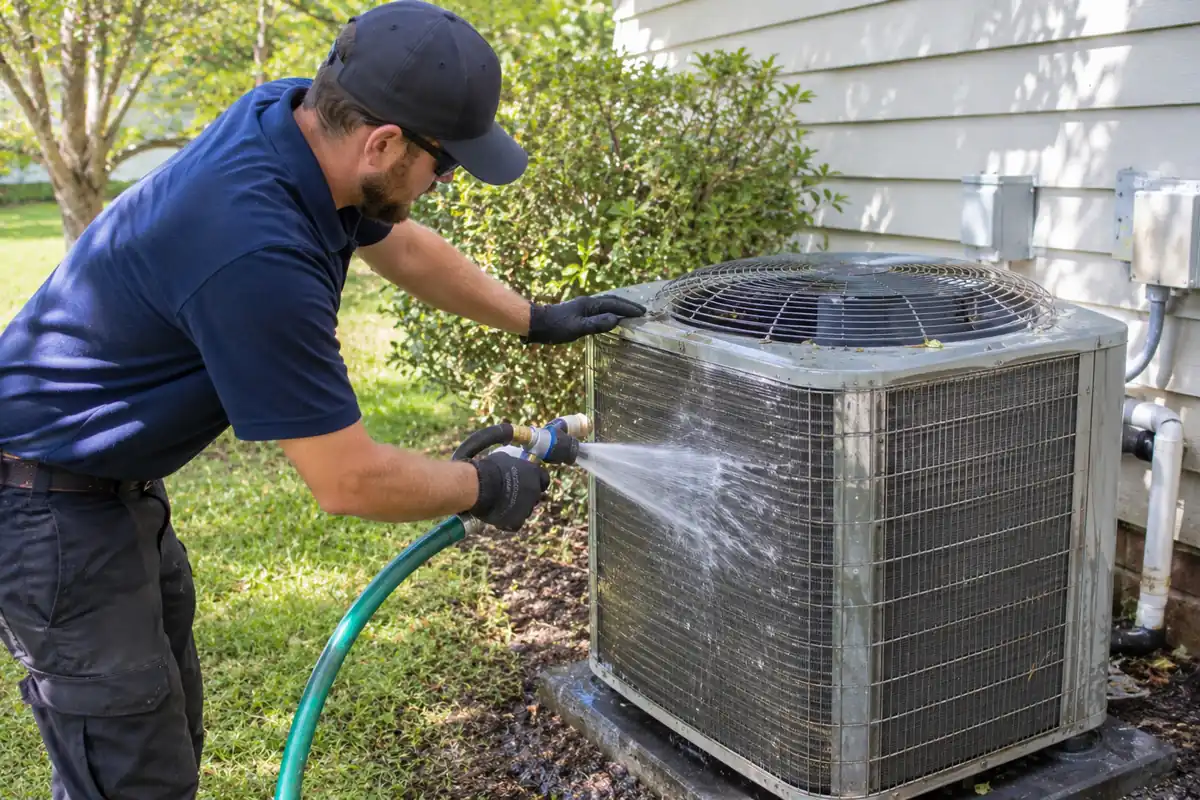
Furnace and AC cleaning
A spring AC cleaning clears pollen from the coils and flushes the drain before July.
AC not keeping up with the heat? Call to talk with a local provider who works on central air.
Call (859) 517-8017Sources
- National Weather Service, Lexington normal number of days, 1991–2020
- U.S. Environmental Protection Agency, A Brief Guide to Mold, Moisture and Your Home
- U.S. Environmental Protection Agency, Phaseout of Class II Ozone-Depleting Substances
- ENERGY STAR, Maintenance Checklist