That Burning Smell When the Furnace First Turns On in Fall
It happens every fall in Lexington. The first cool evening arrives, usually sometime in October, someone bumps the thermostat up, and within minutes the house smells like a toaster that hasn’t been cleaned. Most of the time that furnace burning smell is harmless and gone within an hour or two. Occasionally it’s a warning.
Here’s how to tell the difference, what’s actually burning, and when to shut the furnace off.
The Normal Smell: Dust Burning Off
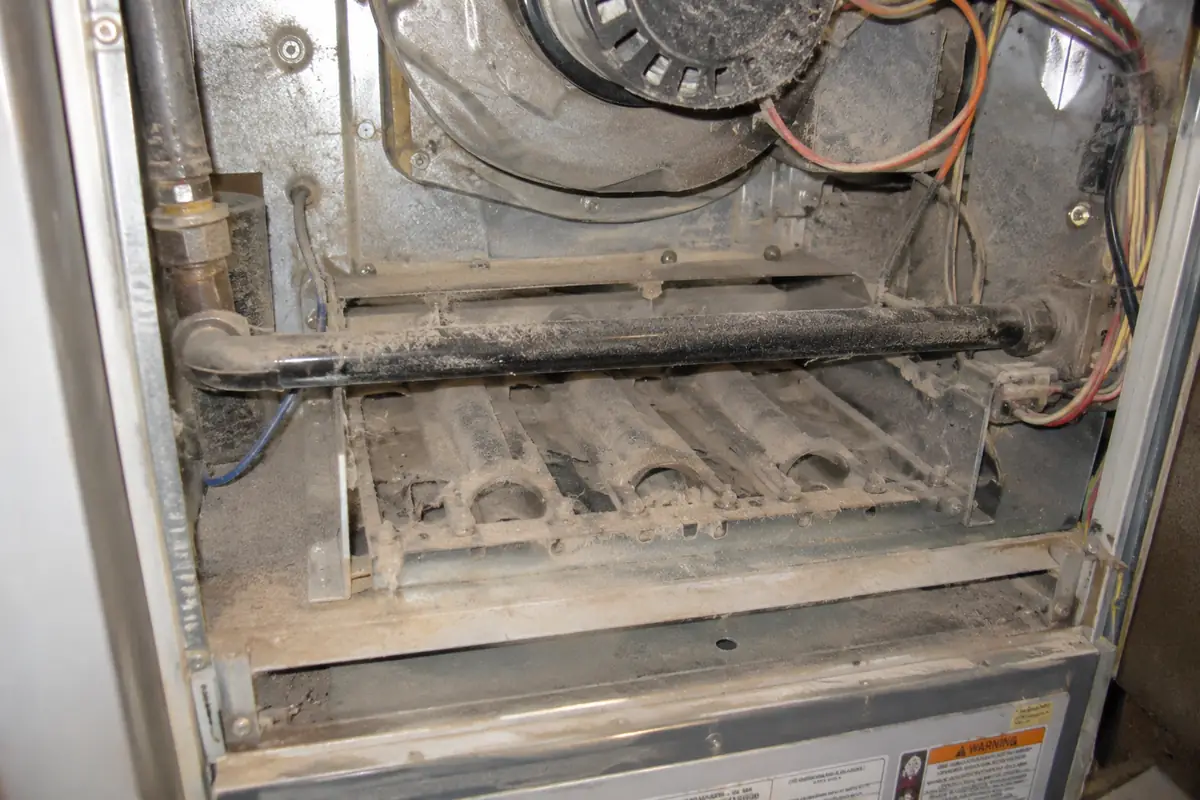
From May to October, a gas furnace in Lexington mostly sits idle while the blower moves air for the air conditioner. Dust, pet hair and lint settle on the burners, the heat exchanger and inside the cabinet. When the burners light for the first time, that layer heats up and burns off.
What it’s like:
- A dry, dusty, slightly burnt smell, sometimes with a little haze near the vents.
- It’s strongest in the first 15 to 30 minutes of the first heating cycle.
- It fades over an hour or two and doesn’t come back the next day.
Open a couple of windows, run the system for a while and let it clear. If you have a high-efficiency furnace in a crawl space or garage closet, the smell may be fainter or stronger depending on how much dust that space collects.
When a Furnace Burning Smell Isn’t Normal
| What you smell | What it may mean | What to do |
|---|---|---|
| Rotten eggs or sulfur | Natural gas leak (gas suppliers add an odorant so leaks smell this way) | Leave the house without flipping switches. Call Columbia Gas of Kentucky or 911 from outside. |
| Burning plastic or rubber | Overheating wiring, a failing blower motor, or something touching a hot surface | Turn the furnace off at its switch and have it checked. |
| An electrical, metallic smell | Motor, capacitor or wiring trouble | Turn it off and schedule a repair. |
| Burnt dust that doesn’t fade after several hours or returns every cycle | Very dirty filter or blower, or debris on the heat exchanger | Check the filter, then have the furnace inspected. |
| Musty, damp smell | Moisture in ducts, a damp crawl space or a dirty AC coil above the furnace | Usually not urgent, but worth having the source found. |
| Smoke or a chemical smell with headaches or nausea | Possible venting problem or carbon monoxide | Leave and call 911. |
Carbon monoxide has no smell at all, which is exactly why the CDC recommends a battery-powered or battery-backup CO alarm near every sleeping area. A furnace odor and a CO alarm are separate signals, and the alarm always wins.
The Filter Is Often Part of the Story
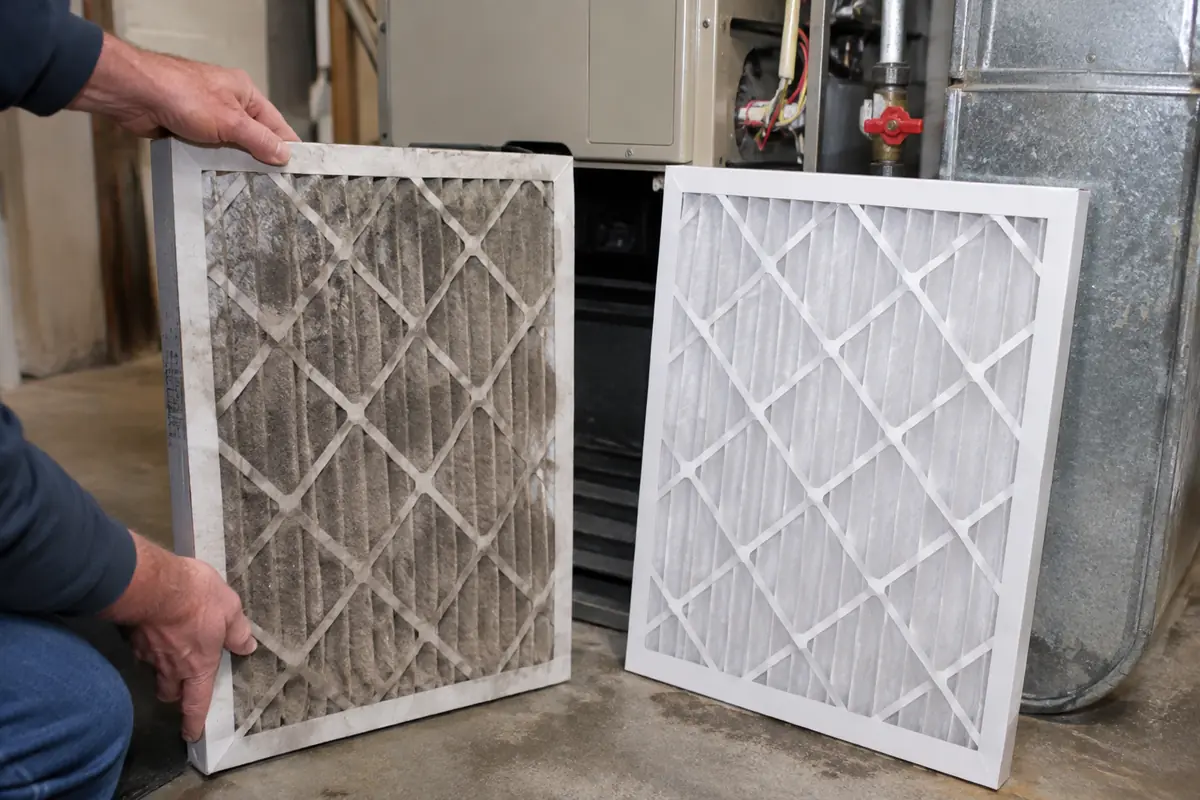
A filter that sat in place all summer while the air conditioner ran can be packed with dust, cottonwood fluff from May and pet hair. A clogged filter restricts airflow, so the heat exchanger runs hotter and the burnt smell lingers. ENERGY STAR suggests checking filters monthly and replacing them when dirty. Fall is a natural time to put in a fresh one, before the first cold night.
A Simple Pre-Season Routine
- Replace the filter in late September or early October.
- Clear the area around the furnace. Storage boxes, laundry and paint cans don’t belong next to a gas appliance.
- Vacuum the registers and returns so less dust gets pulled into the system.
- Test CO alarms and replace batteries.
- Check outdoor vents on high-efficiency furnaces. Leaves and nests can block the white PVC pipes.
- Run the heat on a mild afternoon with windows cracked, so the burn-off happens on your schedule rather than at midnight.
A fall furnace cleaning adds what you can’t safely do yourself: inspecting the burners and heat exchanger, cleaning the flame sensor, checking gas pressure and testing for carbon monoxide at the flue.
When to Stop Using the Furnace
Shut the furnace off at its service switch and schedule a technician if:
- The smell gets stronger instead of fading.
- You see smoke coming from the furnace cabinet.
- The burnt smell comes back every time it runs.
- You hear new grinding, squealing or banging along with the smell.
- Anyone feels dizzy, nauseated or headachy when the heat runs.
Our furnace repair page walks through what a technician should check and the parts that most often fail during Lexington’s first cold weeks.
A Note on Older Lexington Homes
In pre-war houses near downtown or in neighborhoods like Kenwick and Chevy Chase, furnaces often sit in basements that double as storage and laundry rooms. Lint from a nearby dryer and dust from old stone or block walls add to the buildup. Those furnaces are also more likely to vent through a masonry chimney, where debris or a nest over the summer can affect draft. If your home has that setup, a yearly inspection is especially worth it.
Common Questions
How long should the burning smell last the first time I turn on the heat?
Usually under an hour, sometimes a bit longer after a dusty summer. If it’s still strong after several hours, have it checked.
Is it safe to sleep with the furnace running if it smells burnt?
If it’s the normal dust smell and it’s fading, yes. If it smells like plastic, wiring, gas or smoke, turn the furnace off and don’t wait until morning to deal with it.
Can a dirty filter cause a burning smell?
Yes. Restricted airflow makes parts run hotter, and the smell can last longer than the usual first-day burn-off.
Why does my space heater smell the same way?
For the same reason: dust burning off a heating element. Keep space heaters clear of fabric and furniture.
Does a burning smell mean my heat exchanger is cracked?
Not usually. A cracked heat exchanger is more often found during an inspection than by smell. That’s one reason an annual check matters.
Smelling something odd from your furnace? Call to have a Lexington HVAC provider take a look.
Call (859) 517-8017Sources
- Centers for Disease Control and Prevention, Carbon Monoxide Poisoning Basics
- ENERGY STAR, Maintenance Checklist